

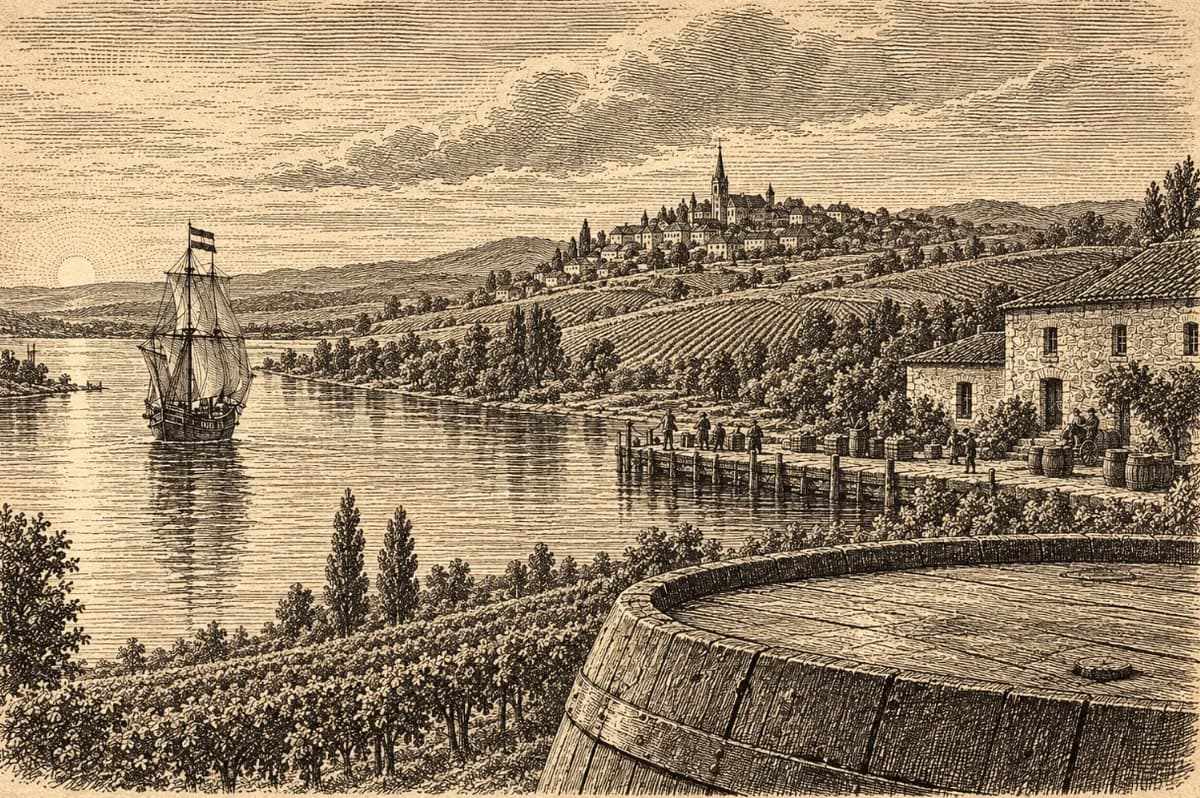
Nearly 160 countries import cognac today, according to the Bureau National Interprofessionnel du Cognac (BNIC), the French body that governs the spirit. That global reach is a strange destiny for a drink that started as a fix for wine too thin to survive a sea voyage. As Encyclopaedia Britannica frames it, cognac is brandy distilled from white wine grown within a specific, legally defined region of southwestern France. The story of how a shipping workaround on the Charente river became one of the world's most regulated and recognizable spirits runs through Dutch merchants, a phylloxera disaster, and a century of French law.
Here is that four-century arc in six dates, each drawn from the BNIC's own history of the appellation:
| Year | Milestone |
|---|---|
| 1643 | Augier becomes the first formally established Cognac house. |
| 1715 to 1795 | Martell, Rémy Martin, Delamain, Hine, Hennessy, and Otard open, setting the template of blending eau-de-vie across crus. |
| 1875 | Phylloxera reaches the Cognac region and begins destroying its vineyards. |
| 1909 | The geographic production zone is formally delimited on 1 May. |
| 1936 | Cognac is recognized as an Appellation d'Origine Contrôlée. |
| 1946 | The BNIC is established after the liberation of France, replacing the wartime distribution bureau. |
Where Cognac Began: Dutch Traders and the Charente Wine Trade
By the 16th century, Dutch traders were sailing up the Charente river into what is now the Charente and Charente-Maritime departments of southwestern France, according to the BNIC. They came for salt from the nearby marshes, paper, and the region's white wine, which they carried home and across northern Europe.
The wine itself was the problem. It was thin, low in alcohol, and acidic, and it did not hold up well on long voyages by sea. Dutch merchants, who needed cargo that would survive the trip and take up less space in a ship's hold, began distilling the local wine before shipping it.
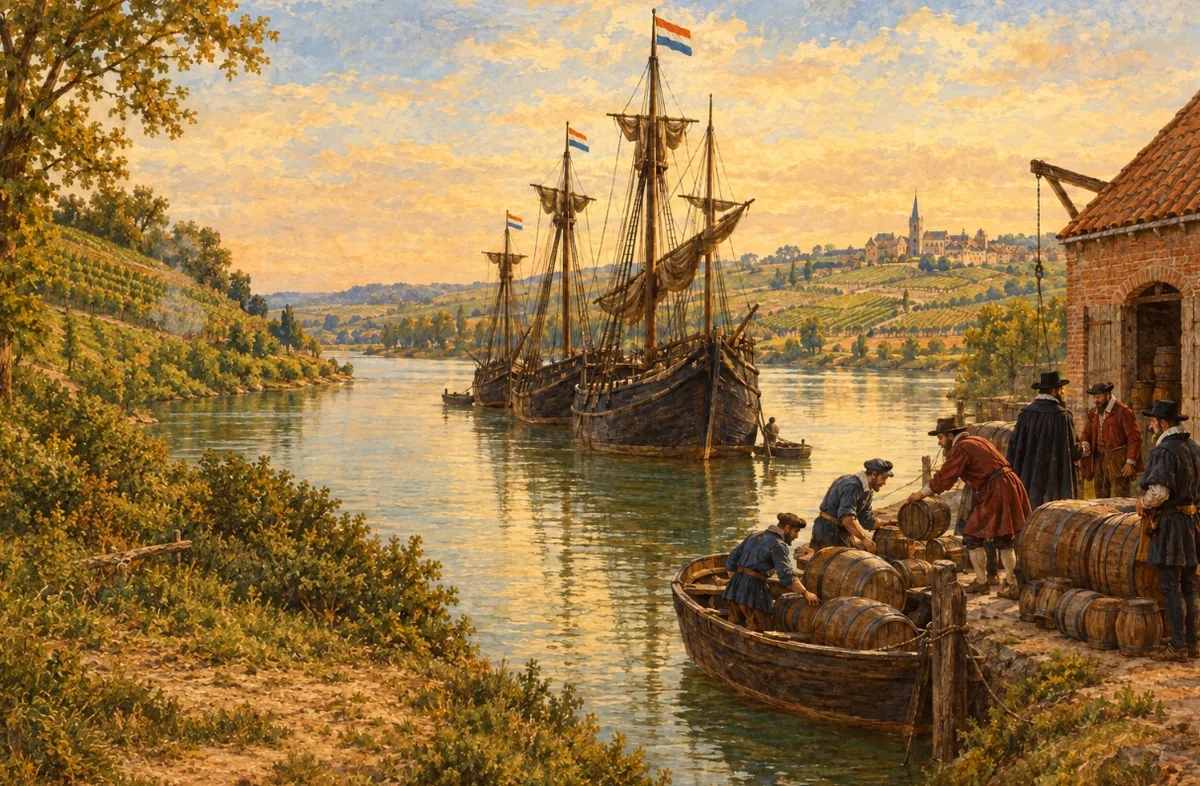
The Dutch called the result brandewijn, or burnt wine, a word that later gave English its term brandy. The idea was practical rather than artistic: a concentrated spirit was easier to transport and tax than barrels of weak, perishable wine, and it could always be diluted again at its destination.
The Dutch presence in the region went beyond trade. King Henri IV called on Dutch engineers to help drain the Marais Poitevin, the marshland north of the Charente, according to the BNIC, work that connected the two countries well before the wine trade took off. The first stills installed along the river were themselves Dutch, built from copper shipped in from Amsterdam, since the region had no copper industry of its own at the time.
Double Distillation and the Oak Cask: How Cognac Found Its Character
At the beginning of the 17th century, distillers in the region began running the spirit through the still a second time, a method now known as double distillation, according to the BNIC. This produced a cleaner, more stable eau-de-vie than the single-distilled brandy the Dutch had started with.
Local legend credits this breakthrough to the Chevalier de la Croix Maron, a lord of Segonzac said to have dreamed that the devil wanted to burn his soul twice over, and who woke convinced his wine needed the same treatment. The BNIC repeats the story without giving it a firm date, which marks it as folklore layered onto a real technical shift rather than a documented event.
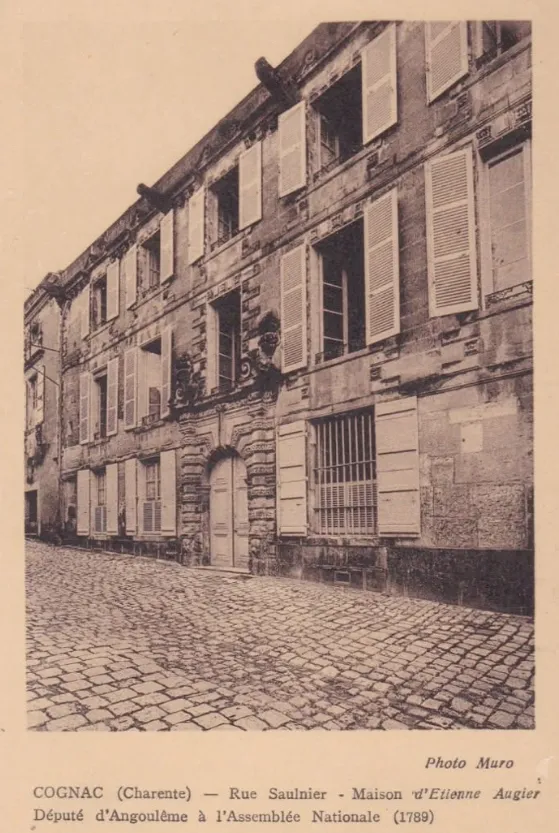
Someone, deliberately or by accident, also discovered that the spirit improved after months at sea in wooden casks. Barrels made from Limousin oak, cut from forests near the region, became the standard aging vessel, lending the spirit vanilla, spice, and toasted notes it would not develop in glass or metal. In 1643, Augier became the first Cognac house to be formally established, per the BNIC, turning a shipping trick into a business with a name attached to it.
Inside a Cognac cellar, or chai, the barrels sit for years losing a small amount of spirit to evaporation through the oak itself, a slow trade of alcohol for aroma that distillers of the period could only have understood by taste. A new eau-de-vie is harsh and clear; after a decade or more in Limousin oak it turns amber, picking up the dried fruit, vanilla, and spice notes that still define the category today. A 2020 chemical and sensory study in the Journal of Agricultural and Food Chemistry confirmed part of what those early distillers could only taste: compounds such as whisky lactone and beta-damascenone, largely absent from young distillate, build up during barrel aging and measurably strengthen the aroma that drinkers associate with older cognac.
The Merchant Houses That Built an Industry
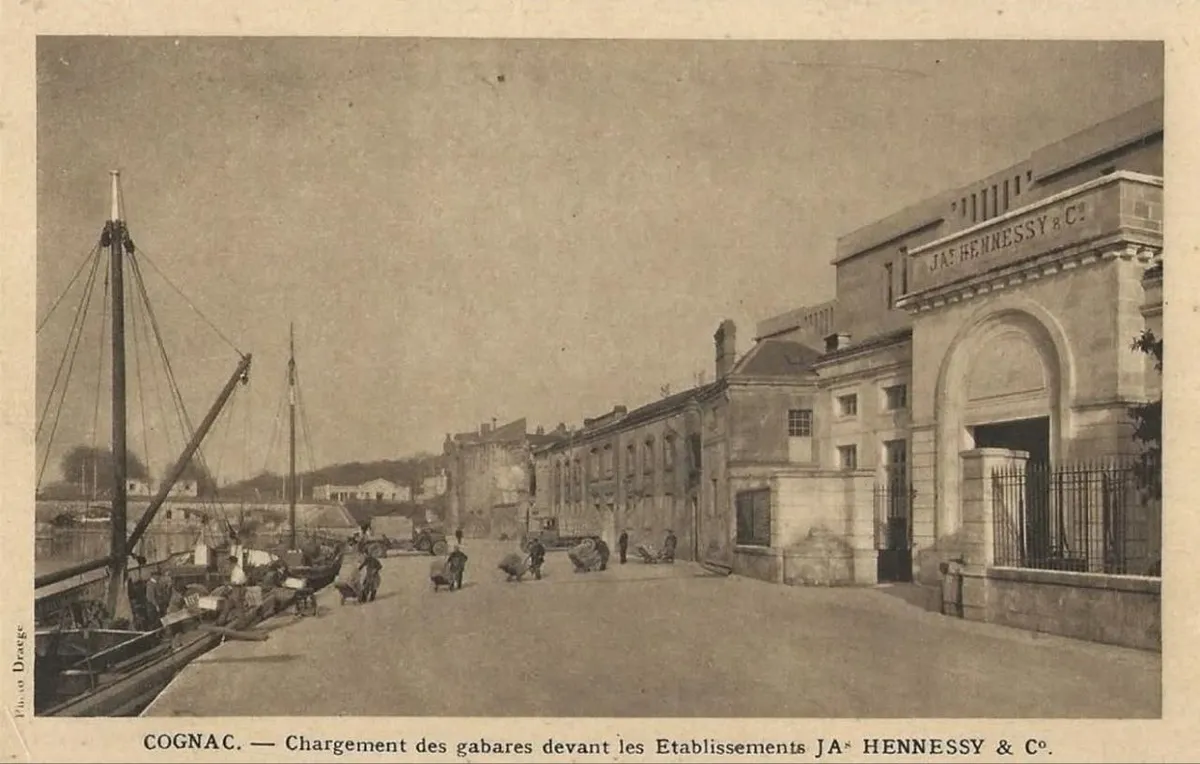
Between 1715 and 1795, a wave of trading houses opened in and around the town of Cognac: Martell in 1715, Rémy Martin in 1724, Delamain in 1759, Hine in 1763, Hennessy in 1765, and Otard in 1795, all dates confirmed by the BNIC. Several were founded by merchants who had come from Ireland, England, and the Channel Islands to trade wine and spirits, among them Richard Hennessy and the Martell family.
These houses did not simply bottle whatever grapes grew nearest their cellars. The region's vineyards split into distinct crus, or growing areas, with different soil and character, and houses learned to buy eau-de-vie from several crus and blend them into a consistent house style. That practice, more than any single recipe, is what let a Cognac house build a reputation that outlasted any one harvest. Readers curious about those growing areas can explore Cognac's growing regions in more detail.
By the late 18th century, the houses founded in this first wave had already set the template every later Cognac house would follow: buy young eau-de-vie from growers across the crus, age it in Limousin oak, and blend for a signature taste rather than a single vineyard's character.
Many of these merchant founders settled permanently in the Charente, married into local families, and raised children who considered themselves as much French as Irish or English. Richard Hennessy, an Irish officer who had served in the French army, is the clearest example: the house he founded in 1765 stayed in his family's hands for generations, and the surname is now attached to one of the best known spirits brands in the world.
Napoleon, Free Trade, and Cognac's Golden Age
During the Napoleonic Wars, Britain and France blockaded each other's shipping for years, cutting off one of Cognac's main markets at a stretch when the trade was still finding its footing. Once that disruption passed, demand from England and its empire returned, and a second wave of houses opened to meet it: Bisquit in 1819, Courvoisier in 1843, Royer in 1853, Meukow in 1862, and Hardy in 1863, all dates recorded by the BNIC. By this point Cognac was no longer a regional curiosity but an export business with its own momentum.
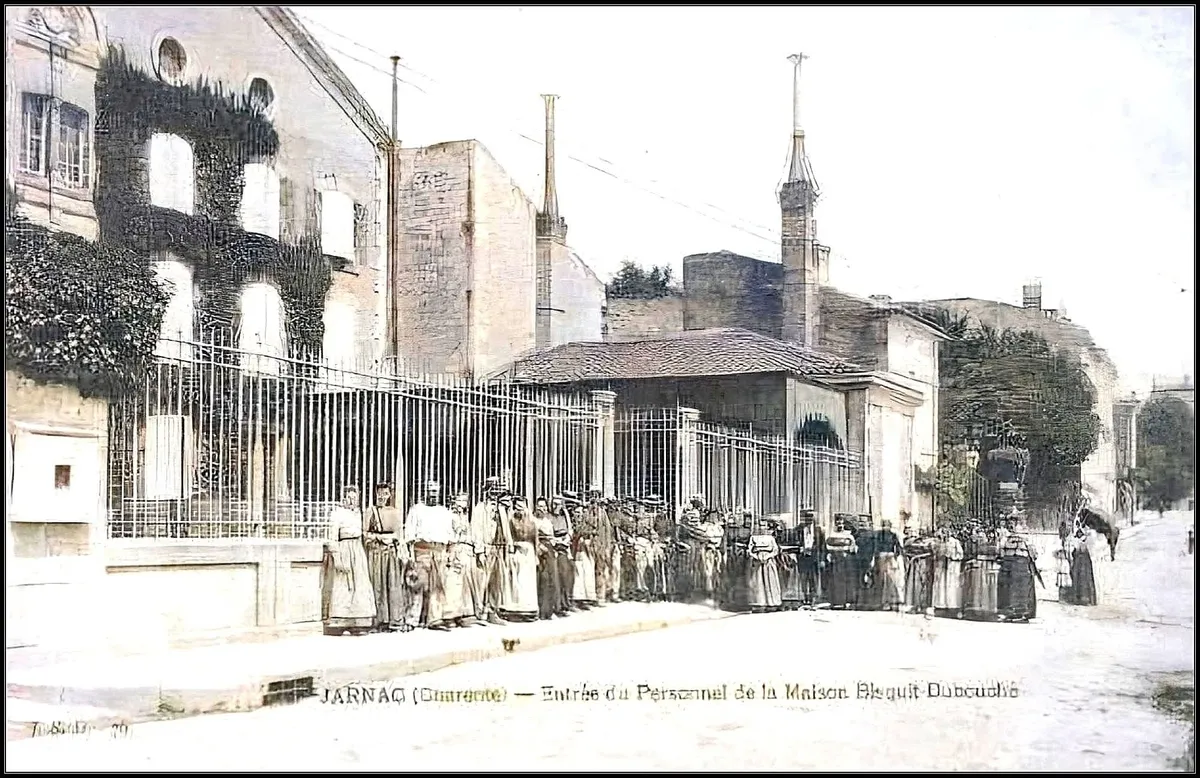
That momentum accelerated in 1860, when a free trade treaty between England and France, pushed through under Napoleon III, lowered the barriers that had limited cross-Channel trade. The BNIC's own figures show what followed: shipments climbed from a little more than 36,000 hectoliters in 1799 to more than 478,000 hectoliters by 1879, an increase that reshaped the region's economy around a single export crop.
As volumes grew, the houses also changed how they sold their spirit. Instead of shipping bulk barrels for merchants abroad to bottle and label as they pleased, the Cognac houses increasingly bottled under their own names and branding, turning Martell, Hennessy, and their peers into recognizable marks in London, New York, and beyond rather than anonymous suppliers of French brandy.
The Phylloxera Crisis: When Cognac Nearly Disappeared
The good years did not last. Around 1875, the phylloxera louse, an insect that attacks grapevine roots, reached the Cognac region, according to the BNIC. It spread through vineyards that had no natural defense against it, since phylloxera had evolved alongside American vines, not European ones.
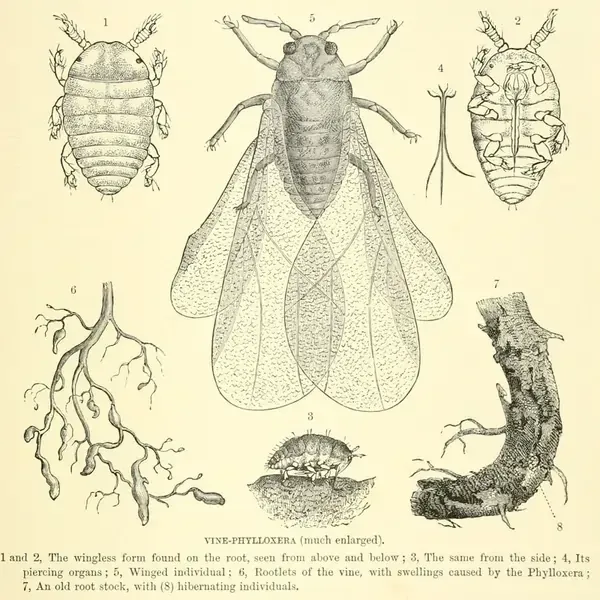
The damage was severe. The BNIC's figures show the region's vineyard area collapsing from roughly 283,000 hectares before the outbreak to about 42,500 hectares by the mid-1890s, a loss of most of the vines that had supplied the industry's growth for a century.
The region's response reached across the Atlantic. In 1887, a delegation led by the viticulturist Pierre Viala traveled to the United States to study American vine species that had grown resistant to the pest, work that fed into the region's new Viticulture Committee the following year, per the BNIC. That committee became the Station Viticole in 1892, the research body that would later merge into the BNIC itself.
Growers eventually replanted using American rootstock grafted with French vines, and in the process shifted toward Ugni Blanc, a hardy, acidic white grape that the BNIC reports now accounts for more than 98 percent of Cognac production. That grafting solution outlasted the crisis that produced it: a viticultural history published in Acta Horticulturae notes that more than 80 percent of vineyards worldwide still grow on grafted rootstock today, the same fix Cognac's growers adopted in the 1880s. Whole families left the region during the worst years, since vines take time to replant and longer still to produce usable fruit, and some communities never returned to the scale of vineyard they had worked before phylloxera arrived.
Drawing the Lines: The 1909 Delimitation and the 1936 AOC
Phylloxera left the region's producers wary of imitation and dilution, and the decades that followed were spent drawing legal boundaries around what could be called Cognac. On 1 May 1909, the geographic production zone was formally delimited, according to the BNIC, fixing which parts of the Charente and neighboring departments could grow grapes destined for the name.
In 1936, Cognac was recognized as an Appellation d'Origine Contrôlée, or AOC, per the BNIC, a status that tied the name to specific grapes, methods, and geography rather than letting it describe any brandy made in the French style. Two years later, in 1938, the region's crus themselves were delimited into the hierarchy still used today.
The best known of those crus is Grande Champagne, prized for chalky soil that growers and houses alike consider the source of the longest-aging eau-de-vie the region produces. Around it sit Petite Champagne, Borderies, Fins Bois, Bons Bois, and Bois Ordinaires, each with its own soil and microclimate, together forming the six crus that the 1938 delimitation put on the map for good.
The Birth of VS, VSOP, and XO
As the appellation rules settled, the houses needed a shared vocabulary to describe how long their eau-de-vie had aged, since blends draw from casks of many different ages. Over the course of the 20th century, that vocabulary standardized into the age-grade categories drinkers still see on every bottle.
VS sits at the youngest end of that scale, the entry point into a house's range. VSOP sits above it, requiring a longer minimum age for its youngest component and generally showing rounder, more developed character. XO sits higher still, reserved for blends built around eau-de-vie that has spent considerably more time in oak. Many houses also use a Napoleon designation between VSOP and XO, a tier that takes its name from Napoleon Bonaparte and signals an age bracket between the two without displacing either one.
These categories were never about one single vintage. A VS, VSOP, or XO designation describes the youngest eau-de-vie in the blend, which is why two bottles carrying the same letters from different houses can still taste quite different from each other. The letters guarantee a minimum age for the youngest component; the flavor still depends on each house's own blend.
The BNIC and Modern Regulation
During the Second World War, a Wine and Eaux-de-Vie Distribution Bureau was set up to protect the region's stocks under occupation. After the liberation of France in 1946, that wartime body was replaced by the Bureau National Interprofessionnel du Cognac, the organization that still governs the appellation today.
In 1948, the BNIC merged with the Station Viticole, the region's viticultural research body that had grown out of the committee formed during the phylloxera crisis, per the BNIC's own history. That merger brought growing, distilling, and research questions under one roof.
The BNIC now functions as a joint body representing both the growers who farm the crus and the merchant houses that blend and sell the finished spirit. It sets and enforces the production rules that keep the AOC meaningful, from which grapes may be used to how the name itself can be marketed abroad, and it is the organization that collects and publishes the historical figures cited throughout this article.
That dual structure matters because growers and merchant houses do not always want the same thing. Growers are paid for grapes and young eau-de-vie, while houses need enough aged stock in reserve to keep selling VSOP and XO years from now, and the BNIC's rules on planting, yields, and stock levels exist largely to keep that balance from tipping too far in either direction.
Cognac Goes Global
Modern Cognac is built almost entirely around export. The large majority of what the region produces each year leaves France, shipped to nearly 160 countries, according to the BNIC, a reach that would have been unimaginable to the Dutch traders who first distilled Charente wine for their own ships.
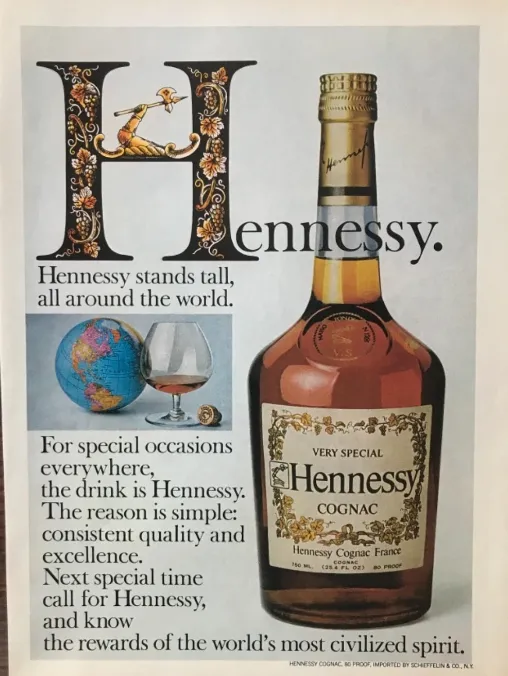
The United States has long been one of the largest single markets for the spirit, a position that traces back to the branded bottling strategies houses adopted in the 1800s and that has only strengthened as Cognac found a second life in American cocktail culture and hip-hop, genres far removed from the Charente farmhouses where it began. In recent decades, markets across Asia, and China in particular, have grown into major destinations for Cognac as well, diversifying a trade that once leaned heavily on transatlantic and European routes.
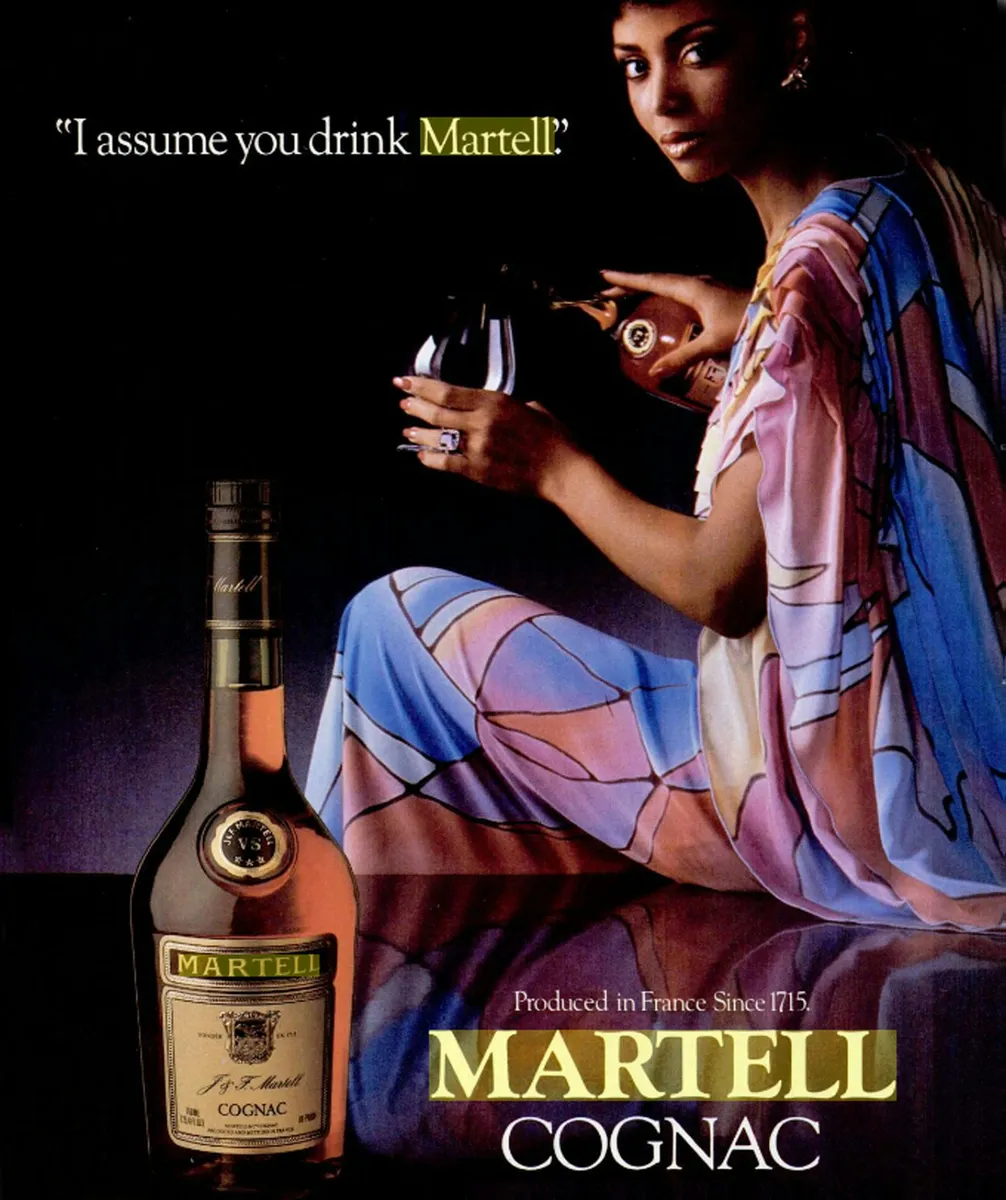
Each of those markets drinks Cognac differently. American bars reach for VS and VSOP in cocktails, Asian markets have historically favored XO and older age grades served over ice at the table, and European drinkers tend toward smaller pours sipped after a meal, three habits built on the same spirit and the same aging categories.
That export orientation runs through almost the entire arc of Cognac's history: a spirit invented to survive a voyage has spent four centuries getting better at being shipped somewhere else.
Cognac Today: Tradition Meets a New Generation of Drinkers
The big houses, Martell, Hennessy, Rémy Martin, Courvoisier, and their peers, still account for most of what reaches store shelves worldwide. Alongside them, a growing number of small, independent producers now bottle single-cru or single-estate Cognac, selling directly to collectors who want to taste the difference between a Grande Champagne and a Petite Champagne rather than buying on brand name alone.
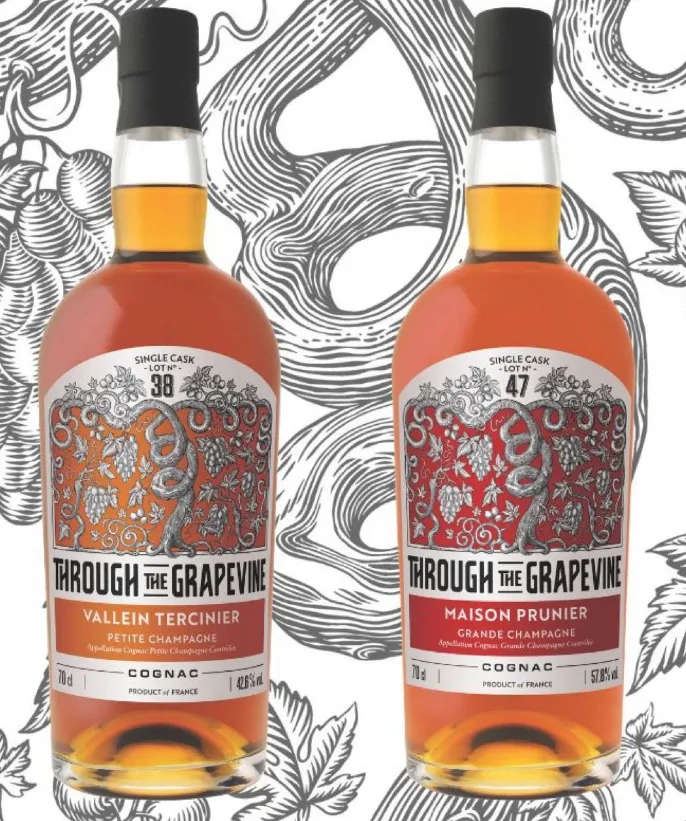
That shift has fed a wider culture of connoisseurship around the spirit: tasting notes, vintage comparisons, and detailed ratings that treat Cognac with the same seriousness long applied to wine or whisky. Members of Cognac Nation take part in exactly that culture, rating bottles on a 0 to 100 scale, tracking their own collections, following the houses and independent bottlers that interest them, and reading expert reviews and other members' notes before deciding what to open next.
The same instinct that led 18th-century houses to blend across crus for a consistent style now shows up in a collector comparing two bottles side by side and writing down which one earned the higher score.
Anyone who wants to put this history into a glass can start by browsing the cognac catalog on Cognac Nation, where four centuries of distilling, blending, and legal line-drawing show up as a few hundred bottles, each with its own crus, age grade, and house behind it.
Frequently Asked Questions
Who invented cognac?
No single person invented cognac. Dutch traders began distilling Charente wine for shipping in the 16th century, and distillers in the region developed double distillation at the start of the 17th century, a technical shift local legend attributes to the Chevalier de la Croix Maron, according to the BNIC.
Why did cognac almost disappear?
The phylloxera louse reached the region around 1875 and destroyed most of its vineyards, with the planted area falling from roughly 283,000 hectares to about 42,500 hectares by the mid-1890s, per the BNIC. Growers only recovered by replanting with American rootstock and shifting to the hardier Ugni Blanc grape.
When did cognac become an AOC?
Cognac was recognized as an Appellation d'Origine Contrôlée in 1936, following the 1909 delimitation of its production zone, according to the BNIC. The crus within that zone were delimited separately in 1938.
What is the difference between VS, VSOP, and XO cognac?
VS, VSOP, and XO describe the minimum age of the youngest eau-de-vie in a blend, with VS at the youngest end, VSOP above it, and XO reserved for blends built around considerably older stock. The same letters can still taste different across houses, since each blends from its own crus and cask reserves.
What is the oldest cognac house?
Augier, founded in 1643, is recorded by the BNIC as the first Cognac house. It was followed by a wave of houses founded between 1715 and 1795, including Martell, Rémy Martin, Delamain, Hine, Hennessy, and Otard.
Why is cognac only made in one part of France?
The name is tied to a specific, legally defined growing area in and around the Charente and Charente-Maritime departments, delimited on 1 May 1909 and confirmed as an AOC in 1936, according to the BNIC. Brandy made the same way anywhere else cannot legally be called cognac, no matter how similar the process.